Resources
A few things I use with clients, so you can get a feel for what we might do together.
Some things I use with clients. They show you what we might do together.
These are samples, not homework. Print them, try them on your own, bring them in, or ignore them completely. Take what helps.
You do not have to use any of these. You can print them, try them at home, bring them to a session, or skip them.
Bring your list
Lists are welcome here. Jot things down during the week as they come up, sort them, and bring the list on your phone or on paper. I'll read yours at the start, so the thing you came in with doesn't get lost at minute 48.
You can bring a list to your session. Write things down during the week. Sort them. Bring the list on your phone or on paper. I will read it at the start.
Private by design. Your list stays in this browser, on this device. It isn't sent to me or anyone else. Copy it, send it to yourself, or print it to bring it along.
This is private. Your list stays on your device. It is not sent to me or anyone.
How I'm arriving today
My list
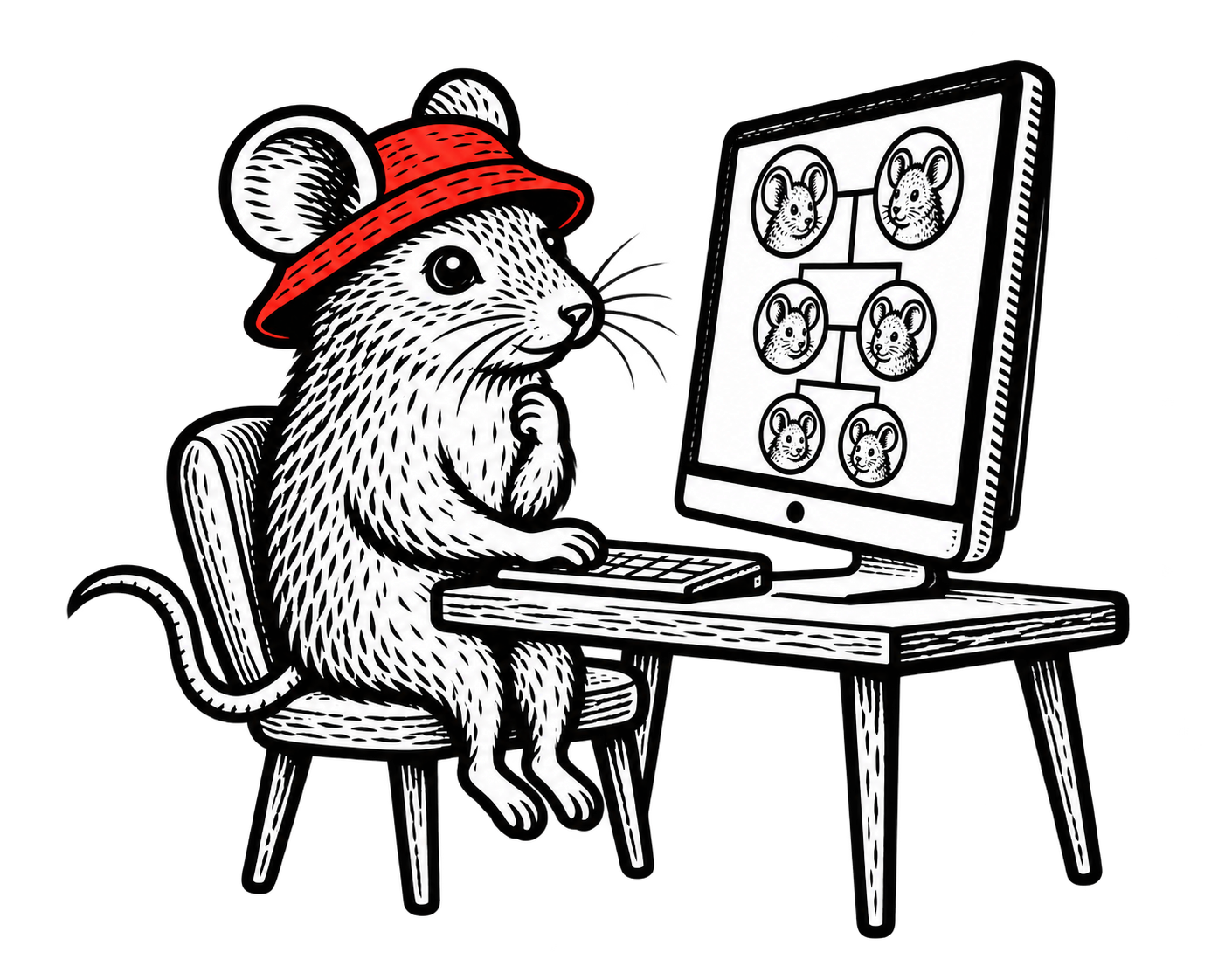
The NeuroKin genogram
A genogram is a family map: the people in your family, drawn across the generations, with lines for how they're connected. Most genograms are built to track what's gone "wrong" down the family line. This one tracks recognition. Who else in your family might be wired like you? What did they call it back then? And what did it cost them, or give them?
A lot of people only start to wonder about this after someone in the family gets diagnosed, often a kid, sometimes themselves. Then they look back and go: oh. It was there the whole time.
An example from my own map. I'm pretty sure my grandma Ev, my mom's mom, and I share a neurotype.
- 🧵 Sewing. She made the clothes for the whole family: her husband and all three of her girls. She'd stay up until 3am sewing. Patterns never made sense to her, so she figured them out her own way, from the drawings.
- 🧹 Cleaning. The house was spotless. Always. As kids, we were often recruited to help. 😂
- 🍰 Baking. She had a chest freezer the size of a small car, filled with desserts, all cut into neat little squares. After every dinner she'd go over to it and ask, "What will we have tonight?" At her funeral, that was one of the stories people told.
Her hyperfixations brought joy to the people she loved. That's what this map is for. Not only diagnosis. Recognition, and sometimes joy.
Things you might map
- Neurokin. Who's diagnosed, who's self-identified, and who's a "probably": the grandparent who knew every train timetable, the aunt who couldn't do family dinners.
- The old words for it. Who "had nerves," "took to bed," had "a breakdown," was "highly strung," "eccentric," or "difficult"? Often that's burnout or shutdown, from before anyone had the words.
- The ones nobody talks about. The relative who was sent away, put in an institution, or quietly left out of the stories.
- Hyperfixations, handed down. Grandpa's ham radio, your mom's quilting, your dinosaurs. Strengths run in families too.
- Who speaks your language. Who gets you without explaining? Who did you always have to translate yourself for? Who was the family translator, explaining you to everyone else?
- Masking. Who held it together in public and fell apart at home? Who was "the easy one" because they hid the most?
- Family roles. The difficult one, the scapegoat, the one who got picked on, the one who kept the peace.
- Sensory stuff. Who couldn't stand tags, noise, certain foods, or hugs?
- The family rulebook. The rules nobody wrote down, and who got in trouble for breaking them.
A few ground rules
- It's your map. You decide who goes on it, including chosen family, pets, and people who aren't related to you at all. You design the symbols.
- This isn't for diagnosing Grandma. "Probably" and "maybe" are fine. It's about what makes sense to you, held loosely, not about proving anything.
- Leave things off. Some branches hurt. You don't have to fill in anyone you don't want to.
- You don't have to do it all at once. Start with you. We can build the rest together, over weeks or months, on screen, on paper, or in the sand tray with figures for people.
A genogram is a map of your family. It shows the people in your family and how they are connected. This one helps you notice who else in your family might be autistic or ADHD, like you.
Many people start wondering about this after someone in the family gets a diagnosis.
An example from my map. I think my grandma Ev and I have the same kind of brain.
- 🧵 She loved sewing. She made clothes for her whole family. She often sewed until 3 in the morning. Patterns were hard for her to follow, so she worked them out her own way, by looking at the pictures.
- 🧹 She loved cleaning the house. She often got us kids to help.
- 🍰 She loved baking. She kept a big freezer full of desserts. After dinner she would ask, "What will we have tonight?" People still tell this story.
Her favourite things made her family happy. This map is not only about diagnosis. It is also about finding joy.
Things you might put on your map
- Family who might be like you. Who is diagnosed? Who thinks they are autistic or ADHD? Who might be?
- Old words. Was someone called "nervous," "odd," or "difficult"? That might have been burnout.
- People nobody talks about. Was someone sent away, or left out of family stories?
- Favourite things. Interests can run in families too.
- Who understands you. Who gets you easily? Who do you have to explain yourself to?
- Hiding. Who hid who they were?
- Roles. Who was called "the difficult one"? Who got picked on?
- Senses. Who did not like noise, tags, some foods, or hugs?
- Family rules. What rules did nobody say out loud?
Some rules
- It is your map. You choose who goes on it. You choose the symbols.
- You do not have to be sure. "Maybe" is fine.
- You can leave people off.
- You do not have to do it all at once. Start with you. We can do the rest together, over weeks or months.
The guide has everything above on one page, plus a QR code that brings your phone straight to the map builder. Handy to stick on the fridge, or to bring to a session.
The guide is one page. It has a code you can scan with your phone to get to the map.
Make your map online
Start with you. Add your people, then connect them, and the map draws itself. When you're done, save it as a picture or send it to yourself (email, messages, whatever you use), and bring it to a session. Or just keep it for yourself.
Start with you. Add people. Then connect them. The map draws itself. You can save it as a picture, or send it to yourself. You can bring it to a session.
Private by design. Your map stays in this browser, on this device. It isn't sent to me or to anyone else, and there's no account. That also means it's gone if you clear your browser data or switch devices, so save a picture if you want to keep it. On a shared computer, use "Clear my map" when you're done.
This is private. Your map stays on your device. It is not sent to me or anyone. If you want to keep it, save a picture. On a shared computer, press "Clear my map" when you are done.
3. Your map
Filled circle: diagnosed. Half-filled: self-identified. Dotted: maybe. Star: the family translator. Double line: speaks my language. Wavy: always translating. Zigzag: conflict. Two bars: cut off.
People on your map
Connections
Time works differently here
A lot of autistic and ADHD people grew up hearing the same few sentences. You're always late. You had all week. You own a watch. Some of the costs were quick and sharp. Some were slower: jobs that didn't last, friendships that wore thin, a lot of quiet shame.
Some of those costs were real, and it's okay to grieve them. They weren't a character flaw.
Disabled people have a name for another way of living with time: crip time. Instead of forcing your body and brain to fit the clock, the clock bends toward you. Your time pools where your attention pools. Switching from one thing to the next is expensive. And a day isn't a fixed number of hours. It's a fixed number of spoons.
Spoon theory comes from Christine Miserandino, who has lupus. Each spoon is a unit of energy. Everything costs some: showering, a phone call, getting there. Some things give a few back, like a walk, good hyperfocus, or sitting with the cat. When the spoons run out, they're out. And nobody does a day alone: other people's spoons count too.
Many autistic and ADHD people were told things like "You are always late" or "You had all week." Problems with time can cost a lot. Some people lost jobs or friends. Many people felt ashamed.
Those losses were real. It is okay to feel sad about them. They are not your fault.
Some disabled people talk about crip time. It means time fits you, not the other way around. Starting and stopping things takes a lot of energy. Your day has a set amount of energy, not just a set amount of hours.
Spoon theory is one way to count energy. It comes from Christine Miserandino. Each spoon is a bit of energy. Everything you do uses some spoons. Some things give spoons back, like a walk or time with a pet. Other people can share their spoons with you, too.
The Spoon Planner
Pick what you need to do today, and give each thing the spoons it costs you. If someone's helping, add them, and their spoons show up next to yours. You can plan the week too, if you want. No scores, no streaks, and nobody fails a day.
Pick what you need to do today. Give each thing some spoons. If someone helps you, add them. Their spoons show up too. You can plan your week too. There are no scores. You cannot fail.
Private by design. Your plans stay in this browser, on this device. They aren't sent to me or to anyone else, and there's no account. On a shared computer, use "Clear my plans" when you're done.
This is private. Your plans stay on your device. They are not sent to me or anyone. On a shared computer, press "Clear my plans" when you are done.
What do you need to do today?
Tap to add. Tap again to take it off.Tap to add. Tap again to remove.
My day
My week
For the nerds
The NeuroKin genogram is my own adaptation. The genogram itself comes from family systems therapy: McGoldrick, Gerson & Petry, Genograms: Assessment and Treatment (Norton). The closest published cousin I've found is Turns, Handley, Story & Hertlein, Identifying and Enhancing Meaningful Relationships for Individuals with ASD: The Socially Playful Genogram, Journal of Creativity in Mental Health, 2019. On families as neurodivergent systems: Michelle Garnett and Tony Attwood, How do we create a neurodiversity-affirming family environment?. On looking back at your family tree after a diagnosis: Unpacking my neurodivergent family tree (Davidson Institute). The "who speaks your language" lines come from Damian Milton's double empathy problem. For what a standard, diagnosis-focused version looks like, see Genogram Pro's neurodivergent family example.
I made the NeuroKin genogram. Genograms come from family therapy (McGoldrick, Gerson and Petry, Genograms). A similar tool is The Socially Playful Genogram (2019). More reading: Garnett and Attwood on neurodivergent families, a blog about a neurodivergent family tree, and the double empathy problem.
Spoon theory: Christine Miserandino, The Spoon Theory, But You Don't Look Sick (2003). On crip time: Alison Kafer, Feminist, Queer, Crip (Indiana University Press, 2013), and Ellen Samuels, Six Ways of Looking at Crip Time, Disability Studies Quarterly, 2017. Shared spoons come from disability justice: Sins Invalid, 10 Principles of Disability Justice, especially collective access and interdependence, and Mia Mingus, Access Intimacy: The Missing Link (2011). The Spoon Planner is my own.
Spoon theory comes from Christine Miserandino (2003). To read about crip time: Alison Kafer, Feminist, Queer, Crip (2013), and Ellen Samuels, Six Ways of Looking at Crip Time (2017). On sharing care: Sins Invalid and Mia Mingus. I made the Spoon Planner.